
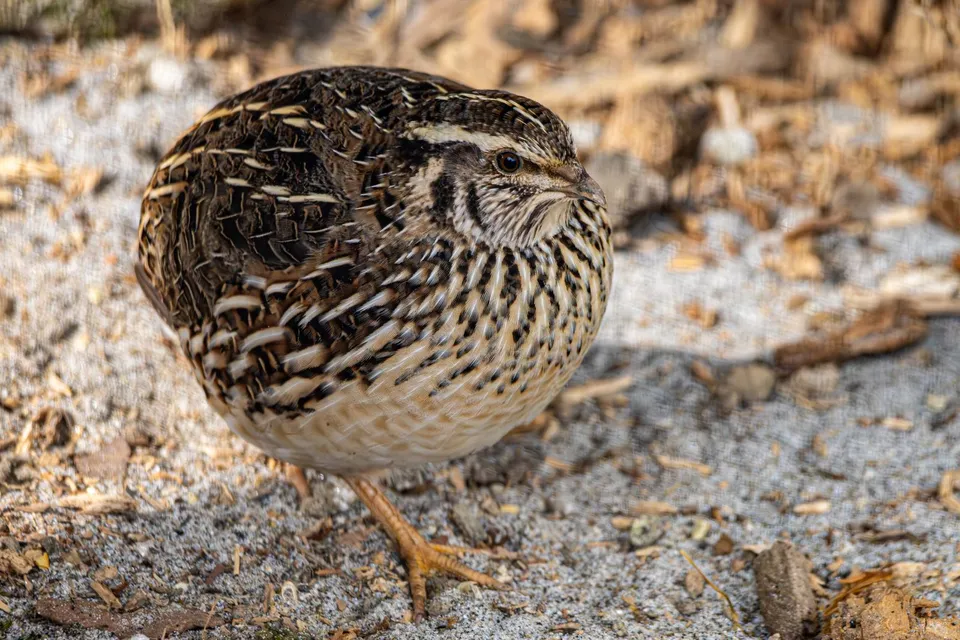
Suitable Complete Feed Is the Foundation
Complete feed is formulated to supply energy, protein, vitamins and minerals together for a particular stage. Vitamin decisions should not be separated from feed selection. A product called a vitamin supplement does not meet every dietary need.
Quail species and production purposes matter. Programmes for Japanese quail and other quail species are not automatically equivalent. Check the intended species before applying published ages or feed transitions.
Source: Mississippi State University Extension — Referenced research and feeding guidance · Mississippi State University — Referenced research and feeding guidance · Alabama Cooperative Extension — Referenced research and feeding guidance
Distinguish Chicks from Growing Birds
Starter feed differs from growing and laying feeds. Giving chicks only adult feed, or trying to bridge that difference with vitamins, is not a complete assessment. Choose feed for the stage’s whole nutrient needs.
Particle size and access matter too. A feeder in the enclosure does not show every bird eats enough. Check actual consumption and access to water regularly.
Source: Mississippi State University Extension — Referenced research and feeding guidance · Mississippi State University — Referenced research and feeding guidance · Alabama Cooperative Extension — Referenced research and feeding guidance
What Changes During Laying and Breeding?
Quail kept for eggs need a different feeding plan from birds raised only for growth or meat. Consider vitamin, mineral and protein balance together in a stage-appropriate feed. One vitamin is not the whole picture.
Read the target species and life stage on the label. Shell or laying changes do not alone prove a particular deficiency. Assess feed, consumption, water and husbandry together.
Source: Mississippi State University Extension — Referenced research and feeding guidance · Mississippi State University — Referenced research and feeding guidance
Reading a Feeding Programme
This framework is not a feed recipe. It organises discussion points; transition timing depends on species and production goals.
| Stage | Main check |
|---|---|
| Chick | Species- and stage-appropriate starter feed |
| Growth | Nutrient balance for production goals |
| Laying and breeding | Suitable complete feed and mineral balance |
| Feed change | Old and new compositions and actual intake |
Source: Mississippi State University Extension — Referenced research and feeding guidance · Alabama Cooperative Extension — Referenced research and feeding guidance
When Should Extra Vitamins Be Considered?
Habitually adding grains or supplements to an adequate complete feed can alter its intended balance. If extra need is suspected, first review the composition and intake. Do not copy another flock’s schedule.
Vitamin stability is affected by time, heat and moisture. Review feed quality instead of trying to compensate for questionable storage simply by adding support to water. Read storage and after-opening directions together.
Source: Mississippi State University — Referenced research and feeding guidance · Merck Veterinary Manual — Bird nutrition reference
Water, Feeders and Records
Keep clean fresh water accessible. Protect feeders from droppings and moisture so feed stays dry and fresh. Do not mix wet or suspected mouldy feed into good feed.
Record feed-change dates, significant consumption changes and supplements. This gives a whole-diet view rather than focusing on one product. Significant lethargy or reduced intake warrants veterinary assessment.
Source: Mississippi State University — Referenced research and feeding guidance · Merck Veterinary Manual — Bird nutrition reference
Frequently Asked Questions
Should quail receive vitamins daily?
Routine extra vitamins may be unnecessary for a flock eating suitable complete feed. Assess composition and intake.
Can quail chicks eat adult feed?
The starter stage needs a different nutrient balance. Choose species- and stage-appropriate feed.
Can I give chicken feed directly to quail?
Do not assume equivalence. Have nutrient profile, species and production purpose assessed.
Are vitamins alone enough for laying quail?
No. Suitable feed, protein and minerals also matter.
Should I increase vitamins when shells change?
Do not increase amounts on one sign alone. Review feed, mineral balance, intake and care.
Can grain be added to complete feed?
Added ingredients change its overall nutrient density. Assess composition before mixing.
How should vitamin-containing feed be stored?
Follow the feed manufacturer’s directions. Moisture, heat and long storage affect vitamin stability.
How much vitamin should be added to a drinker?
Do not set an amount without flock and product details. Follow the label and expert assessment.
References
- Mississippi State University Extension — Referenced research and feeding guidance
- Mississippi State University — Referenced research and feeding guidance
- Alabama Cooperative Extension — Referenced research and feeding guidance
- Merck Veterinary Manual — Bird nutrition reference
Sources checked: 17 November 2026. General nutritional information. Assess supplementation with a veterinarian according to the bird’s needs.
More Nutrition Guides
Quail nutrition
The Importance of Probiotics for Quail
A source-based guide to gut flora, digestive support and probiotic research for quail, with practical checks and frequently asked questions.
Pigeons nutrition
The Importance of Vitamins for Pigeons
A source-based guide to vitamin balance, feeding and supplementation for pigeons, with practical checks and frequently asked questions.